
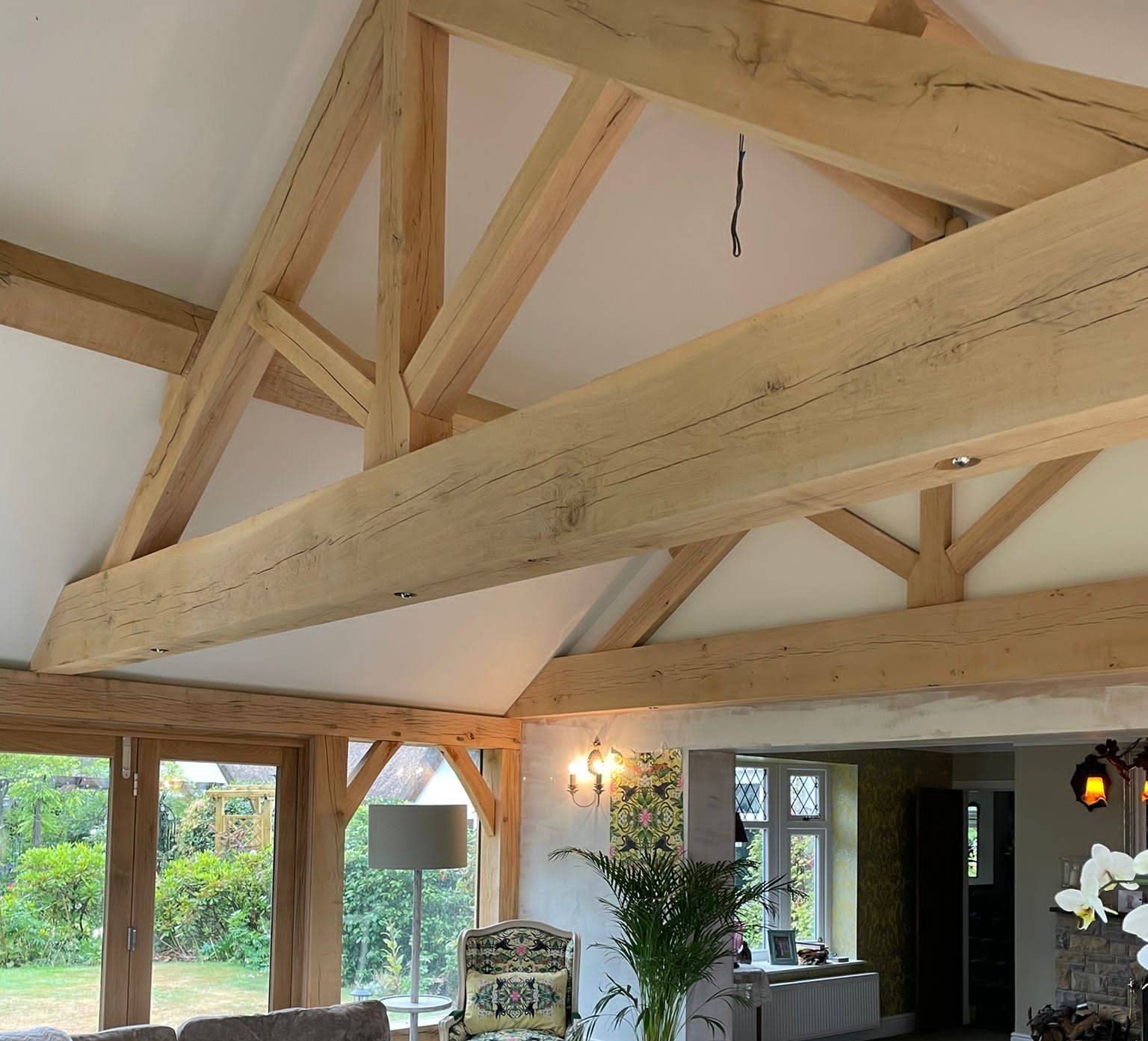
There is a moment when a room stops being functional and becomes extraordinary. For many homeowners, that moment comes when a bespoke feature truss is installed — a structural timber frame designed to be left fully exposed, drawing the eye upward and giving a space a character that no plasterboard ceiling could ever replicate.
Feature trusses are one of the most impactful things you can add to a home. They work in barn conversions, open-plan kitchen extensions, orangeries, new builds, and even commercial spaces — anywhere a ceiling is an opportunity rather than an afterthought.
What Is a Feature Truss?
A feature truss is a structural timber element designed to be seen. Unlike standard roof trusses — which are hidden behind plasterboard and insulation — feature trusses are crafted with both structural integrity and visual impact in mind. They span a room, support the roof or floor above, and simultaneously become the defining focal point of the interior.
They are entirely bespoke. No two feature trusses are the same because no two spaces are the same. The design is developed around your structural requirements, the proportions of the room, and your aesthetic vision.
Types of Feature Truss
The profile of the truss is what gives each installation its character. The most common designs are:
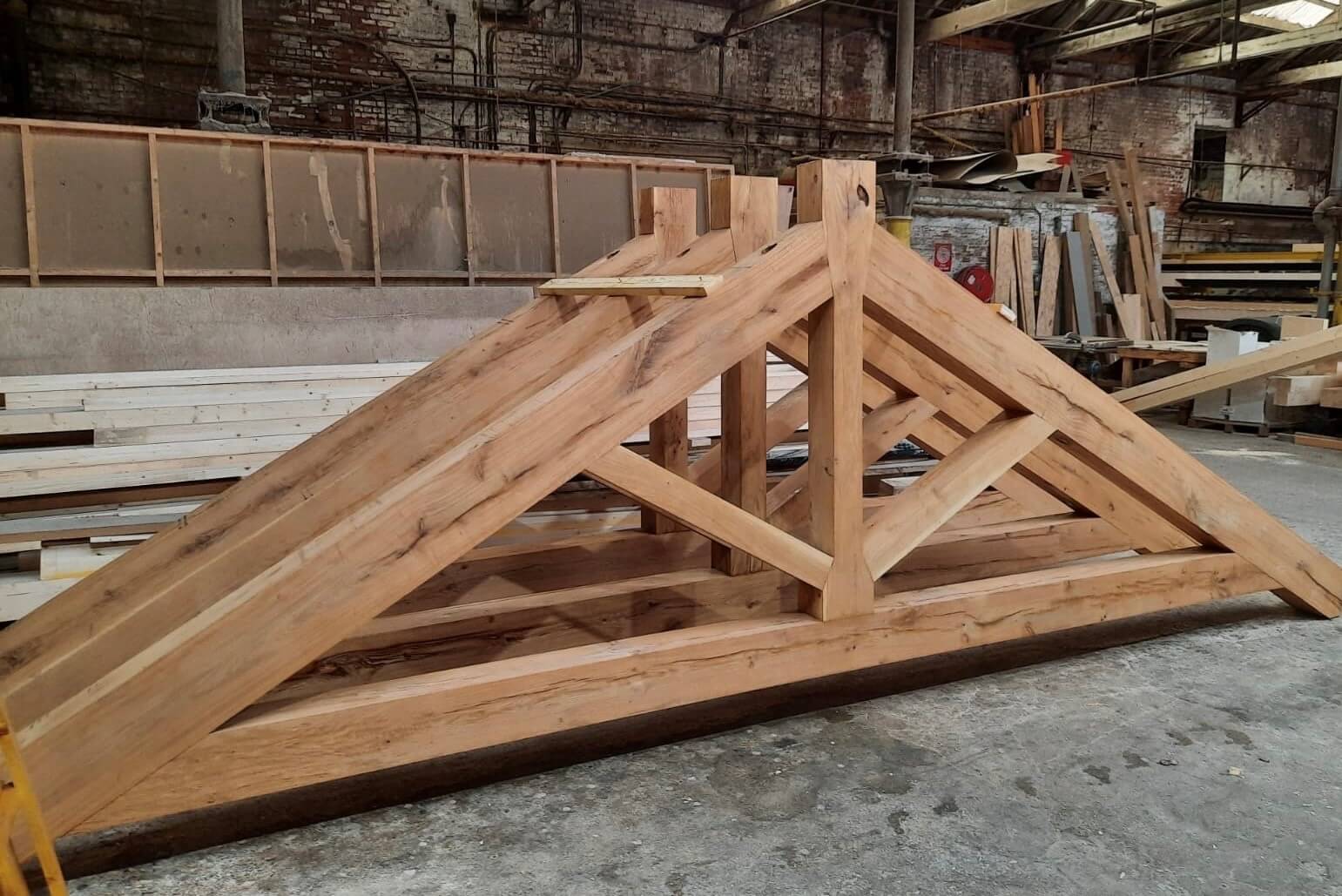
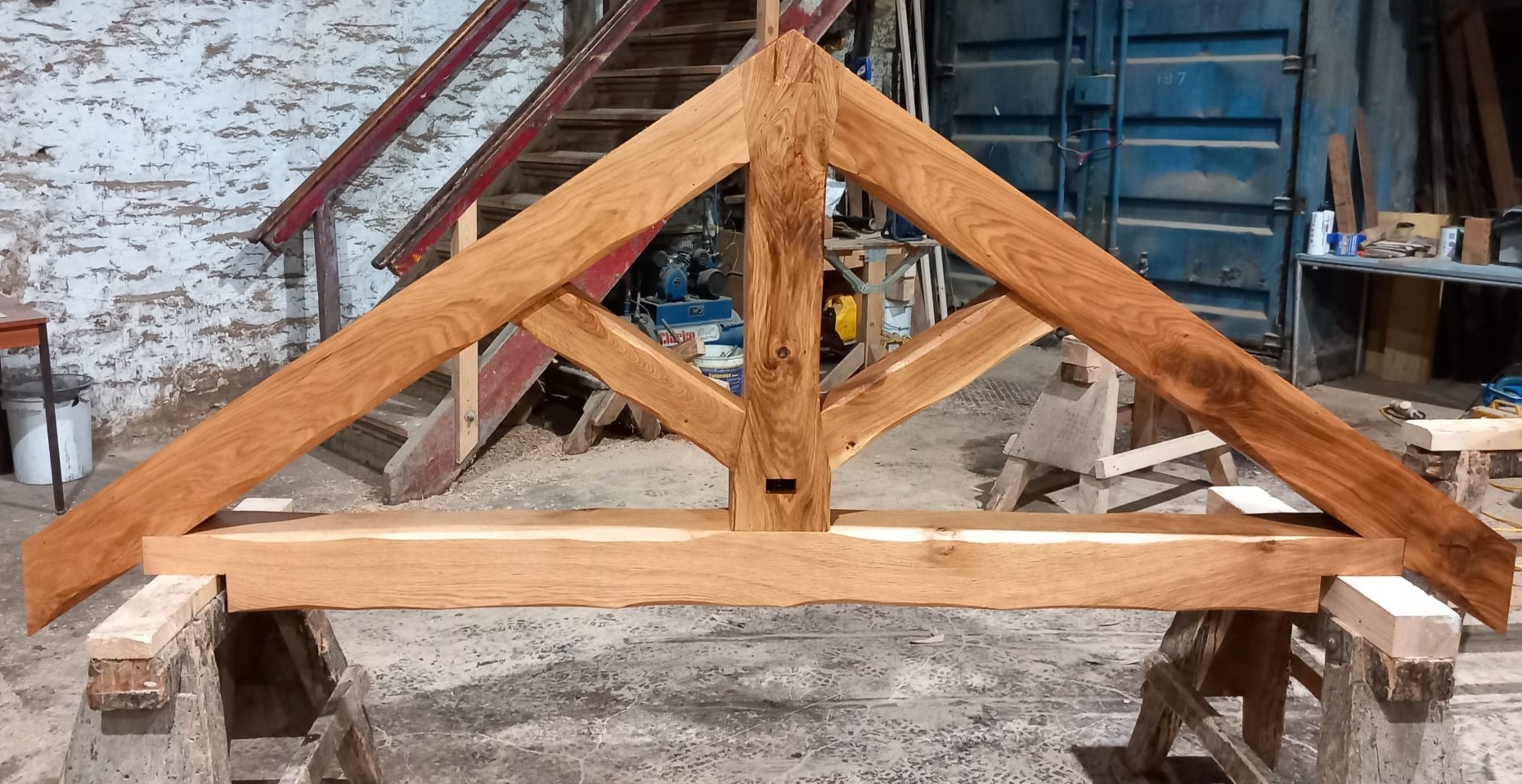
King post truss — the most traditional form, with a single central vertical post flanked by two raking principal rafters. Clean, symmetrical, and timeless. Works beautifully in both traditional and contemporary interiors.
Queen post truss — two vertical posts create a wider central opening, ideal where a clear span across the middle of the room is structurally or aesthetically important.
Scissors truss — the rafters cross in a scissors configuration to create a vaulted ceiling effect. Particularly popular in open-plan extensions where height and drama are both desired.
Curved and arched trusses — bespoke sweeping forms that introduce movement and warmth. Stunning in orangeries, glazed garden rooms, and any space where curves complement the architecture.
Tension rod trusses — timber principal members combined with galvanised steel tension rods for a contemporary industrial aesthetic. The contrast between warm wood and polished steel suits modern self-builds and commercial interiors alike.

Materials — Oak, Douglas Fir, and Glulam
The timber species defines the look, feel, and longevity of the finished truss:
Oak — the traditional and most requested choice. Rich, complex grain that deepens and darkens over time. Available in green (unseasoned) or kiln-dried form. Green oak develops small surface cracks as it dries — entirely normal, and considered part of its character.
Douglas Fir — warmer and more affordable than oak, with a reddish-brown tone and straight, consistent grain. Increasingly popular in contemporary interiors where a lighter, cleaner aesthetic is preferred.
Glulam — glued laminated timber, the material of choice for curved profiles and longer spans. Glulam can be manufactured to virtually any geometry, making it ideal for arched trusses and sweeping beam forms that would be impossible in solid timber.

Adzed finish — a traditional surface treatment in which the timber face is worked with an adze to create a hand-hewn texture. It immediately distinguishes the truss from anything machine-produced, and is one of Dunscar’s most popular finish options for clients who want authenticity.
Where Are Feature Trusses Used?
The applications are broader than most people expect:
- Barn conversions — feature trusses are central to the barn aesthetic, replacing lost structural elements while preserving the spirit and scale of the original building
- Open-plan kitchen and dining extensions — where the roof structure itself becomes the centrepiece
- Orangeries and glazed garden rooms — curved or arched trusses create dramatic roof lines visible from both inside and out
- New builds — incorporated at design stage to give a home a unique interior character from the outset
- Church and public buildings — symmetrical feature trusses for high-ceilinged spaces requiring both structural capability and visual gravitas
- Commercial interiors — restaurants, hotels, and leisure venues where feature trusses create atmosphere and differentiate the space
The Design and Manufacturing Process
Because every feature truss is bespoke, the process begins with a conversation rather than a catalogue. Here is what to expect:
- Initial consultation — we discuss the space, the structural requirements, and your aesthetic vision
- Design drawings — we produce structural and visual drawings for your review and approval, including elevation views so you can picture the finished result
- Material and finish selection — oak, Douglas fir, or glulam; natural, oiled, or adzed finish
- Manufacture — hand-crafted in our Bolton workshop using both traditional joinery techniques and precision engineering
- Delivery — packaged and delivered to site with full assembly drawings for your builder


What Does Dunscar Timber Engineering Supply?
Bespoke feature trusses are designed and manufactured at our facility in Bolton, Lancashire, and supplied to architects, main contractors, and direct clients across the UK. Our completed feature truss installations include residential extensions, barn conversions, churches, and commercial buildings.
As TRA members, ISO 9001 accredited, and PEFC certified, the quality and sustainability of our timber is verifiable — not just claimed.
| Enquire about a bespoke feature truss — visit dunscartimber.co.uk/feature-trusses / or call 01204 301671 |
Frequently Asked Questions
How much does a feature truss cost?
Every truss is bespoke so costs vary significantly depending on the profile, span, material, and finish. Contact us for an accurate quote — we’re happy to provide indicative figures at an early stage.
Do I need planning permission?
The truss itself doesn’t require planning permission, but structural alterations to your property may. Always check with your local planning authority and structural engineer before proceeding.
Can feature trusses be retrofitted into an existing room?
Yes — feature trusses can be installed in existing spaces as well as new builds and extensions. A structural assessment of the existing roof and loadings will be needed before design can begin.
How long does manufacture take?
Lead times vary by complexity. Typically 4-8 weeks from design approval. Contact us early in your project to avoid programme delays.
Can I choose my own finish?
Yes. We offer natural, oiled, and adzed finishes as standard, along with painted options. We’re happy to discuss any specific finish requirements at the design stage.